Handling diabetes is a daily struggle for many. It can require near constant forethought about when and what a person will eat during the day, if and how much insulin the meals will require, innumerable finger pricks to check glucose levels, and the added inconvenience of constantly carrying around insulin pumps and testers, extra batteries, and everything else they will need to get through the day.
Diabetes
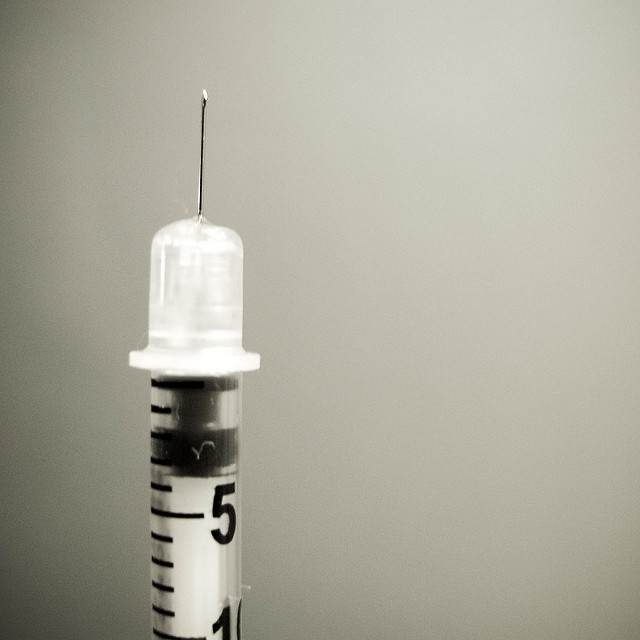
Diabetics may have to self-administer insulin shots like this three times a day.
Diabetes refers to a family of diseases where the body is unable to effectively produce or use insulin, the hormone required to convert food into energy. The cause of diabetes is not known, and so far, there is no cure. Diabetes is the seventh leading cause of death in the United States today.
According to the American Diabetes Association, there are 40 million children and adults in the United States, or 12% of the population, who have diabetes. Of the 40 million people with diabetes, 29 million have been diagnosed with the disease, and 11 million people are unaware that they have the disease.
There are three main types of diabetes:
- Type 1 is an autoimmune disease
- Type 2 is associated with hereditary and lifestyle risk factors
- Gestational diabetes occurs during pregnancy
Type 1 Diabetes is characterized by the body’s inability to produce insulin and therefore necessitates daily injections of insulin. Because it most often develops in children, it is often referred to as "juvenile diabetes." Breakthrough T1D, formerly Juvenile Diabetes Research Foundation (JDRF), now reports that approximately 1.5-2.1 million Americans may have type 1 diabetes (T1D), with an estimated 199-300,000 of these being children and adolescents.
Stabilizing insulin levels is the key to managing diabetes. The standard treatment today focuses on supplementing the body’s insulin, typically through injection (needles) or insulin pumps, which are worn outside the body. This requires the patient to test his or her blood sugar levels several times per day and carefully maintain blood insulin levels. While this is recognized as the best standard of care currently, researchers hope to find a way to help the body produce or better regulate its own insulin levels.
One such method being researched uses stem cells to create the insulin-producing islets in the pancreas. While stem cell therapy has yet to cure type 1 diabetes, there are documented cases where patients have gone years without needing insulin injections. Some clinical trials are using cord blood stem cells specifically to treat diabetes.
Stem Cells in the Treatment of Type II Diabetes
In 2017, researchers gathered and analyzed 13 studies published between 2006 and 2016, comprising 342 patients who received stem cells like those abundant in cord blood and another 111 who received stem cells like those abundant in cord tissue to treat their diabetes. While not everyone responded to the treatment, researchers observed improved glucose control and reduced dependence on insulin lasting up to four years. While the results showed promise for the treatment of diabetes using stem cells, it still left a few questions unanswered, including who were the ideal candidates, what was the best route of administration, what was the optimal dose, and was there a need for multiple transfusions.
Brazilian Study Treating Type I Diabetes
A clinical trial conducted in Brazil comprising 21 adult patients with type 1 diabetes shows that a stem cell infusion may remedy the disease, at least for a number of years. Published during 2017 in the journal Frontiers in Immunology, the results showed that most patients became insulin-free for three and a half years and one patient did not have to use insulin for eight years. “We now understand stem cell transplants can succeed in treating diabetes for some,” said Bart Roep, Ph.D., the Chan Soon-Shiong Shapiro Distinguished Chair in Diabetes, professor/founding chair of the Department of Diabetes Immunology and monitor of the clinical trial.
These positive outcomes were not the rule. For some patients, the stem cell transplant had little to no effect on their type 1 diabetes (T1D).

Bart Roep, Ph.D.
“We discovered the immune signature predicting these outcomes—either favorable or not—which is the first step toward personalized medicine in type 1 diabetes,” said Dr. Roep. “Understanding why it sometimes fails will allow us to design new treatment strategies for those less fortunate patients. Also, it is the first definitive proof that T1D can be cured.”
In the study, the type 1 diabetes patients lasted up to 30 months after infusion without insulin; however, after that point in time, the benefits started to decrease and most of the long-lasting insulin-free patients eventually resumed insulin. This indicated that additional mechanisms may be at play or that genetic background may still have an influence. To counter this effect, T-regulatory cells (Tregs) were infused. In short-term follow-ups, infusions of Tregs decreased insulin requirements in six out of eight patients, two of which became insulin-free.
The stem cells in this study were autologous hematopoietic stem cells. They are the same type of stem cells found in umbilical cord blood. Because type 1 diabetes (often referred to as juvenile diabetes) is an auto-immune disease that shows up early in life, it is easy to see where the outcome of this study could prove beneficial to people whose cord blood was stored at birth. Cord blood is the best source of these hematopoietic stem cells because of their naïveté and lack of any mutations caused by ageing.
The results of this study follow a recent conclusion by the same researchers that type 1 diabetes was not caused by immune system mistakenly attacking insulin-creating beta cells but rather caused by distressed beta cells themselves effecting the immune response.
Stem Cell Educator Therapy
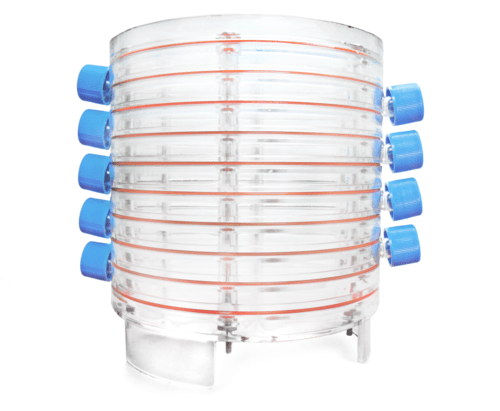
The Stem Cell Educator device is said to re-educate immune system cells
The Stem Cell Educator (SCE) uses a novel cell identified by Dr. Yong Zhao as having embryonic and hematopoietic characteristics. Dr. Zhao says these cord blood–stem cells (CB–SC) can be used to re-educated lymphocytes and stop autoimmune responses. The Educator circulates a patient’s blood through a closed-loop system that separates mononuclear cells from the whole blood, briefly co-cultures them with adherent cord blood–stem cells and returns the re-educated cells to the patient’s circulation. The Stem Cell Educator does not introduce new stem cells into patients in comparison with other stem cell–based therapies. In addition, in prior trials, Dr. Zhao says the educator eliminates the need for prior matching and a treatment take as few as 8–10 hours.