Autism Spectrum Disorder (ASD) is a neurodevelopmental condition that has seen a significant rise in diagnoses over the last few decades. While this increase is partly attributed to improved diagnostic criteria and greater awareness, researchers continue to investigate other contributing factors.
While current behavioral therapies and medications focus on managing specific symptoms, there is no known medical "cure." This has led to a significant surge in regenerative medicine research to explore how we might improve functional outcomes for children on the spectrum.
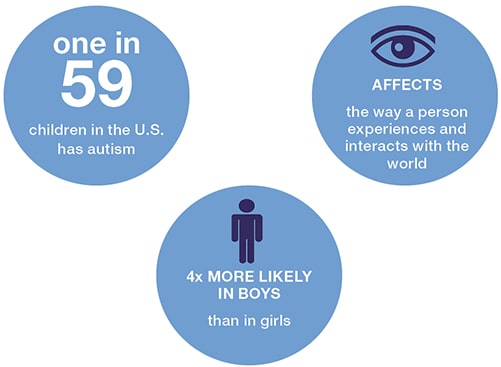
As of 2023, the CDC reports that autism affects one in 59 children in the United States. It is nearly four times as common in boys as in girls. While current behavioral therapies and medications focus on managing, there is no known medical cure. While this increase may be attributed to how autism is diagnosed, it could be that other factors are increasing its prevalence. This has led to a significant increase in regenerative medicine research to explore how we might improve functional outcomes for children on the spectrum.
Effects of Autism
According to Autism Speaks, autism is characterized by challenges with social interaction, communication, sensory sensitivity, and repetitive behaviors. Since it is a “spectrum” disorder, the combination and severity of symptoms vary for every child.
Common Behavioral Characteristics
- Social Communication Differences: Difficulty understanding verbal and non-verbal cues, maintaining eye contact, or engaging in reciprocal social play.
- Repetitive Patterns: Engaging in repetitive motor movements, insistence on strict routines, or having highly fixed interests.
- Sensory Sensitivity: Over- or under-reactivity to sensory input, such as light, sound, or textures. Bearing a child with autism is a growing concern for many parents as the number of people it affects has risen over the years.
While this increase may be attributed to how autism is diagnosed, it could be that other factors are increasing its prevalence. As of now, autism affects one in 37 boys and one in 59 children in general. Current therapies and medications for autism are designed to treat some of the specific symptoms of the condition, but scientists have yet to figure out how to move a child off the spectrum.
But all this could change as Dr. Joanne Kurtzberg and her team at Duke University Medical Center and other researchers are bringing new hope to the treatment of autism.
Clinical Trials
Duke University
In 2010, Duke Medicine was awarded $10 million to support an innovative research program to explore the use of umbilical cord blood cells to treat hypoxic brain injury in newborns, stroke, cerebral palsy, and related brain disorders. Subsequently, in 2015, Duke was awarded an additional grant to specifically study whether infusion of autologous cord blood cells in children with autism spectrum disorder was safe and feasible.
Cord Blood:
Phase I (2017): This preliminary study established that an intravenous infusion of a child’s own (autologous) cord blood is safe and well-tolerated. The results were encouraging as 70% of the 25 participants showed improved in behaviors.
Phase II (2020): This randomized, placebo-controlled study of 180 children, included three study arms: 1. autologous (self) stem cell infusions; 2. Allogeneic (donor) stem cell infusions 3. Placebo. However, secondary analyses indicated that, among the subset of autistic children without co-occurring intellectual disability, cord blood treatment was associated with improvements in parent-reported communication skills, clinician-rated improvement, sustained attention (via eye-tracking), and increases in alpha and beta spectral power on EEG.
Cord Tissue
Phase I (2020): This study established that cord tissue mesenchymal stromal cells (hCT-MSC) are safe and well-tolerated. Improvements were seen in about half of the participants.
Phase II (2024): This is a double-blind trial investigating whether hCT-MSC improves social skills in children with autism aged 4-11. Results of this trial have not yet been published.
Duke University Medical Center previously received permission to expand access to cord blood therapies for various brain disorders, a move that attracted significant interest from families with stored cord blood. While this Expanded Access Protocol (EAP) was designed to run alongside the Phase II clinical trial to provide broader access to emerging therapies, there have been recent changes to its availability. Specifically, the program is no longer accepting new patients for autism treatment, though it remains active for other conditions such as cerebral palsy and hypoxic brain injury. For these active branches of the protocol, eligibility generally requires that children have their own stored cord blood or access to a partially or fully matching unit from a sibling.
Sutter Institute of Medical Research
Another study run by the Sutter Institute of Medical Research explored the use of stem cells from umbilical cord blood to improve language and behavior in children with autism. Twenty-nine children with autism, ranging in age from two years to seven years, received an infusion of their own cord blood stem cells stored at birth. Afterwards, the participants were regularly tested for a year using a variety of psychological and cognitive assessment tools. Sixty percent of the parents of the children who participated in the study said they saw moderate to significant improvements, especially in language and social skills.
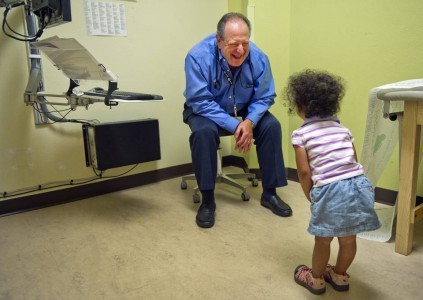
Dr. Chez with a young autistic girl
The trial’s principal investigator, Dr. Michael Chez, director of Pediatric Neurology at the Sutter Institute, reports that “the results of this study indicate that cord blood stem cells may offer ways to modulate or repair the immune systems of these patients with autism, and in doing so, improve language and some behavior in some children. More work is needed to prove this, but for a small placebo-controlled pilot study, this is a very good outcome.”
Dr. Chez also believes that any positive effects seen after the treatment would probably not wear off over time.
“When children with autism gain a new skill, it’s like making a new connection (in the brain). The brain shouldn’t deteriorate unless it is a degenerative disease,” he said.
Other Studies
One of the first clinical trials to look at cord blood as a treatment for autism was completed in August 2013 in China. Thirty-seven children with autism were divided into three groups: 14 subjects received cord blood mononuclear cells (CBMNC) transplantation and rehabilitation therapy; nine subjects received both CBMNC and umbilical cord–derived mesenchymal stem cell (UCMSC) transplantation and rehabilitation therapy; and 14 subjects received only rehabilitation therapy. The results showed that transplantation of CBMNCs demonstrated efficacy compared to the control group; however, the combination of CBMNCs and UCMSCs showed larger therapeutic effects than the CBMNC transplantation alone.
Success Story
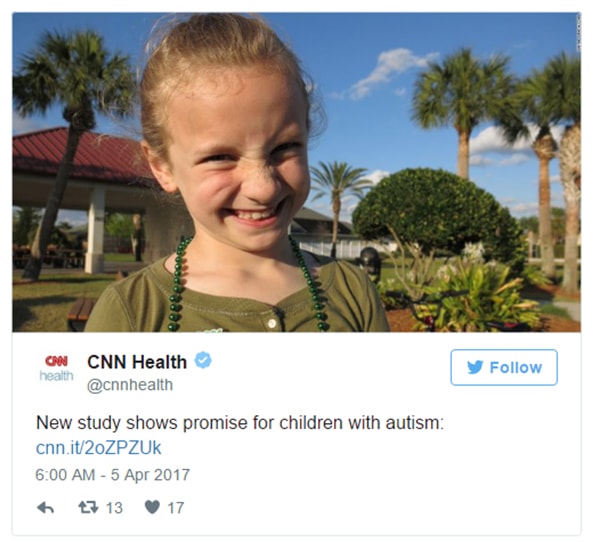
CNN posted a video of one family who took part in the clinical trial at Duke University and saw encouraging outcomes in their young daughter, Gracie.
Gracie displayed many of the traits of autism, including avoidance of social touch and verbal and nonverbal communication, repetition of actions, and overall behavioral problems such as tantrums, outbursts, and public fits. She was diagnosed with mild to moderate autism a little after her second birthday, but her parents, Gina and Wade Gregory, say caring for her consumed about 75% of their day.
It is around this time that Gracie's parents first heard about a trial using cold blood in the treatment of autism. After taking part in this phase I trial, Gracie has never been the same.
On a scale of 1 to 10, Gina and Wade say her improvements have been around an 8 or 9. They say her autism now affects only 10% of their day and that Gracie's tantrums have gotten much better, she shows more affection, and she can better handle stressful social situations. Up until this change in Gracie's behavior, she did not seem to fit in any specialized school programs, where, today, Gracie is able to attend—and thrive in—"regular" school.
"We will say we don't think it's cured her. You still see some of the small idiosyncrasies that she does have," said Wade. "But again, I think it's supercharged her learning curve. It's pushed her to do things she normally wouldn't do."
"She got better, and we're just thankful for that," added Gina.
How Cord Blood Treats Autism
There are a few schools of thought on how cord blood can repair brain trauma or neurodegenerative disorders:
- The transplanted stem cells secrete growth factors that indirectly rescue the injured tissue.
Clinical Trials
With the field of regenerative medicine rapidly evolving, clinical trial recruitment and study statuses change frequently. You can find the most up-to-date, real-time information on clinical trials on the National Institutes of Health (NIH) database.
Parents who have cord blood stored with Cryo-Cell and want to learn more about gaining access to these trials treating autism can use the link to make contact with us.