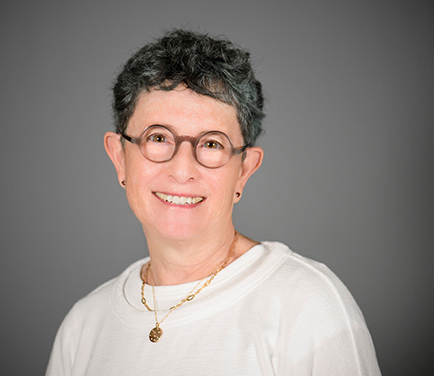
 Dr. Joanne Kurtzberg
Over the past 30 years, Dr. Joanne Kurtzberg has conducted research in the field of cord blood banking and transplantation, specifically focusing on the development of cellular therapies. Since participating in the first-ever umbilical cord blood transplant in 1988, she has continued to contribute to ongoing developments in the field.
First Cord Blood Transplant
Although Dr. Kurtzberg did not perform the first cord blood transplant, the child, Matthew Farrow, was a pediatric patient of hers. The five-year-old Marthew suffered from Fanconi Anemia, a severe inherited disease that damages the patient's bone marrow. He did not have a matching bone marrow donor, but a new opportunity arose when his mom became pregnant with a little girl.
Dr. Kurtzberg, who had been involved in the boy’s care almost since birth, told his parents his last chance may be an experimental treatment using the stem cells originating from the umbilical cord blood of his soon-to-be-sister; otherwise, he may not live more than another six months. Mathew underwent the transplant as a last-ditch effort, and today, he is a healthy man in his 30s who is able to lead a normal lifestyle.
"I am glad to see science is able to provide solutions for cases which used to be regarded as hopeless," said Dr. Kurtzberg. "I only hope that those who continue throwing umbilical cord blood into the garbage will realize that it's a treasure."
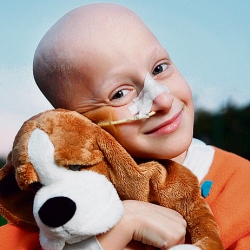 Amit Kadosh underwent a cord blood transplant in 2010 at the age of six after exhausting all her other options in her home country of Israel. Today, she is a healthy teenager.
 Her Career
Since taking part in that first transplant, Dr. Kurtzberg has studied the use of umbilical cord blood in the treatment of disease. She established a pediatric transplant program at the Duke University Medical Center, treating children with cancer, as well as blood and immune system diseases. Early in her research, Kurtzberg found cord blood to not only be effective in treatment but also advantageous to other sources, with a lower risk of graft-versus-host disease and post-transplant complications.
In 1998, Dr. Kurtzberg established an unrelated donor cord blood bank, the Carolinas Cord Blood Bank, at Duke. Duke University was also the first transplant facility to perform an unrelated cord blood transplant in 1993, and one of the first to use cord blood in the treatment of brain injuries. The latter stemmed from improvements in cognitive function that Dr. Kurtzberg and other researchers observed in children treated with cord blood for genetic conditions like Hurler syndrome. It was hypothesized that cord blood may show similar benefits in children with brain injuries like autism and cerebral palsy.
Kurtzberg worked with autistic children while she was in university and first became interested in how the children could become detached and unreachable to alert and highly present, for instance, with certain music, rhythms, and tones. She wanted to better understand the internal mechanisms at work that made this leap possible in autistic children and specialized in pediatrics with a sub-specialty in pediatric hemato-oncology. With evidence that cord blood could improve cognitive function, it was only natural that Kurtzberg would pursue the hypothesis that it could treat autism and other brain injuries.
Cord Blood for Brain Injuries
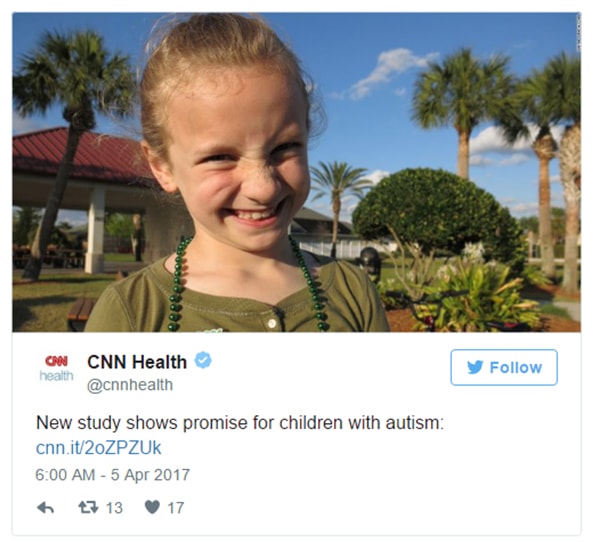 CNN highlighted some of the promising results seen in seven-year-old Gracie Gregory's autism after undergoing a cord blood treatment.
Dr. Kurtzberg's work using cord blood for brain injuries began with cerebral palsy and carries on to the present day. The results of the clinical trial showed that "umbilical cord blood improves whole brain connectivity and motor function in young children with cerebral palsy." She has seen similar promising results in an autism study. As a result of the findings from these two studies, parents interest in the cord blood for the treatment of cerebral palsy, autism and other brain injuries has skyrocketed.
More to Come
Today, Dr. Kurtzberg continues her work with cord blood stem cell research at Duke University.